Bathroom Remodeling Guide: Tips for Las Vegas Homeowners

Angel Sandoval is the owner and lead craftsman at Majestic Cabinets LLC, bringing over two decades of hands-on experience in custom cabinetry and residential construction to every project in the Las Vegas Valley.
A bathroom remodel changes more than the way a room looks. New vanities, better tile, smarter lighting, and a layout that actually works can turn a cramped, outdated bathroom into a space you enjoy using every day.
We see this shift firsthand with almost every project we take on.
A homeowner walks us through years of frustration with a vanity that never had enough drawer space, and a few weeks later, that same homeowner is telling us how much easier their mornings feel.
Many Las Vegas homeowners deal with the same issues. Vanities run out of storage fast. Grout stains and never fully comes clean. Mirrors sit under harsh, flat light that makes grooming harder than it should be. Fans struggle to keep up with steam from long showers in the desert heat, where indoor humidity swings can be more extreme than people expect.
A remodel fixes these problems at the source.
At Majestic Cabinets, we design and build custom bathroom vanities for homeowners across Las Vegas, Henderson, Summerlin, and North Las Vegas.
What Is Bathroom Remodeling?
Bathroom remodeling means updating the room so it looks better and functions better.
Most projects touch the vanity, countertop, tile, lighting, and plumbing fixtures. Some go further and reshape the entire layout, moving plumbing lines and reworking how the space flows.
No two remodels look the same, because no two households use a bathroom the same way.
One homeowner wants more counter space for two people getting ready at once before work.
Another wants a walk-in shower instead of a tub they haven’t used in years. A growing family might need better storage for towels, toiletries, and bath toys that otherwise end up scattered across the floor.
Your goals, your budget, and your bathroom’s current condition all shape the plan we build with you.
Most bathroom remodels fall into two broad categories, and understanding the difference helps you set realistic expectations before the first estimate ever comes in.
1- Cosmetic Remodeling
A cosmetic remodel keeps the plumbing and layout in place. You swap out the vanity, refresh the countertop, replace tile, update lighting, and repaint. Nothing moves behind the walls.
This keeps the project faster, less disruptive to your household, and easier on your budget, which makes it a common starting point for homeowners who like their bathroom’s footprint but not its finishes.
2- Full Bathroom Renovation
A full renovation reworks the space from the studs out. Plumbing gets relocated. Walls may move to widen a cramped layout.
A tub becomes a walk-in shower. A single vanity becomes a double.
This option costs more and takes longer, but it gives you full control over layout and storage, which matters most when the current floor plan simply doesn’t work for how your household lives.
Understanding the duration of a small bathroom remodel can also help set realistic expectations for the construction process.
Every remodel, cosmetic or full, should balance style with daily function.
A bathroom needs to look good in photos, but it also needs to hold up to steam, splashes, wet feet, and constant use for years after the project wraps.
Cabinet Refinishing Specialists
Make Your Old Cabinets Look New Again
If your cabinets are still structurally sound but look worn or outdated, refinishing is the smartest move. Most jobs in Las Vegas are completed within a few days — we keep the mess to a minimum the whole time.
Six Signs It’s Time to Remodel Your Bathroom
Not every bathroom needs a full renovation.
A few clear signs point to remodeling as the smarter long-term move, and we hear these same complaints from clients again and again before they call us.
1. The Vanity Has No Storage Left
Toiletries pile up on the counter. Drawers jam shut because they’re stuffed past capacity.
A vanity without enough storage pushes clutter into view every single day, and no amount of tidying fixes a cabinet that was simply built too small for the household using it.
2. Mold or Water Damage Shows Up
Dark spots near the tub, soft spots in the flooring, or peeling paint near the shower point to moisture getting where it shouldn’t.
These issues only get worse with time, and by the time they’re visible on the surface, the damage underneath is often further along than homeowners expect.
3. The Fixtures and Tile Feel Dated
Old tile patterns, worn faucets, and outdated lighting age a bathroom fast, even when everything still technically works.
A bathroom can be fully functional and still feel like it belongs to a different decade.
4. Ventilation Can’t Keep Up
Steam that lingers on the mirror long after a shower means your exhaust fan isn’t doing its job.
Poor ventilation feeds mold growth and slowly damages cabinetry, paint, and grout, even in bathrooms that otherwise look well maintained.
The U.S. Environmental Protection Agency (EPA) explains that controlling moisture and improving ventilation are effective ways to prevent mold growth inside homes.
5. The Layout No Longer Fits Your Household
Kids, aging parents, or a growing family change what a bathroom needs to do.
A single, narrow vanity may no longer serve the number of people relying on it every morning.
6. Water Pressure and Efficiency Are Falling Behind
Older fixtures waste water and often deliver weak pressure.
Newer fixtures perform better while lowering your utility bill, which makes this one of the easier upgrades to justify on cost alone.
Case Study: A Vanity That Finally Fit the Family
A family in Henderson reached out to us after outgrowing their single-sink vanity years earlier.
Two working parents and two teenagers were sharing one small mirror and one shallow drawer every morning, and mornings had turned into a bottleneck.
We redesigned the primary bathroom around a double vanity with dedicated drawer space for each person, added a linen tower for towels that had previously lived in a hallway closet, and swapped the old flat lighting for sconces on either side of the mirror.
The family told us afterward that the change saved them close to twenty minutes of morning traffic jam, which was more than they expected from a project they’d originally framed as “just replacing an old cabinet.”
Six Benefits of a Bathroom Remodel
A remodeled bathroom delivers more than a fresh look.
It changes how the space performs every single day, and the benefits tend to compound the longer you live with the upgrade.
1. Better Storage
Custom vanities put every inch of space to work.
Deep drawers, built-in dividers, and tall linen cabinets keep the room organized and the counter clear, which makes the whole bathroom feel larger even when the footprint hasn’t changed.
2. Stronger Moisture Resistance
Moisture-resistant cabinetry, sealed countertops, and proper ventilation protect your investment from the humidity a bathroom deals with every day.
This matters more in a bathroom than in almost any other room in the house, since the material is fighting condensation and splashing daily.
3. Improved Safety
Non-slip flooring, brighter task lighting, and grab bars where needed make the bathroom safer for everyone in the household, including aging family members or anyone recovering from an injury.
4. Lower Water and Energy Use
Low-flow faucets, efficient toilets, and LED lighting cut water and electricity use without sacrificing performance, which adds up over the lifespan of the fixtures.
5. Higher Home Value
Bathrooms consistently rank among the top home improvements for return on investment.
A well-designed bathroom appeals to nearly every buyer, even ones who might not connect with your kitchen’s more personal design choices.
6. A Better Daily Routine
Mornings run smoother in a bathroom that works with you instead of against you.
Better lighting, better storage, and a better layout make a real difference, one day at a time, in a way that’s easy to underestimate until you’ve lived with the upgrade.
Three Types of Bathroom Remodeling Projects
The right project depends on your budget, your goals, and your current bathroom’s condition.
We walk every client through these three options before recommending a direction.
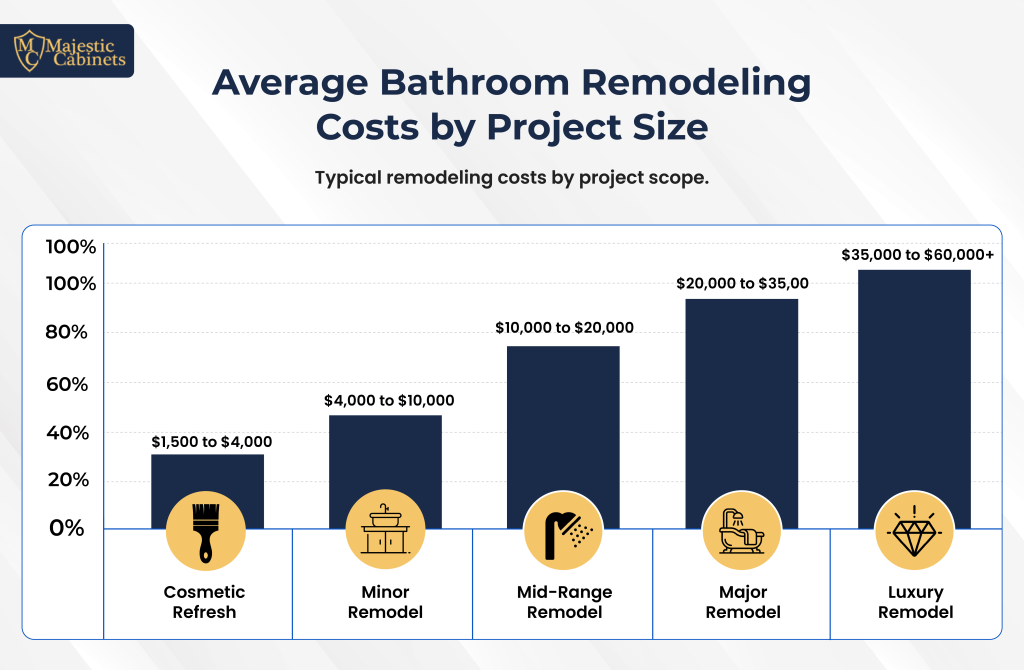
1. Cosmetic Bathroom Remodel
A cosmetic remodel refreshes the look without changing the layout. New vanity, new countertop, new fixtures, new paint.
This works well if your bathroom already functions fine but looks tired, and it’s usually the fastest path to a noticeably different room.
2. Partial Bathroom Remodel
A partial remodel targets specific problem areas. You might replace the vanity and countertop while keeping the tub and tile as they are.
This approach improves function without the cost of a full renovation, and it’s often the right call when only one part of the bathroom is actually holding the space back.
3. Full Bathroom Remodel
A full remodel changes everything. New vanity, new tile, new lighting, new fixtures, and often a new layout.
This is the right choice if your current bathroom no longer works for your household at all, whether that’s due to size, plumbing limitations, or a layout that simply fights against how you live.
Planning Your Bathroom Remodel
A clear plan keeps your remodel on budget and on schedule.
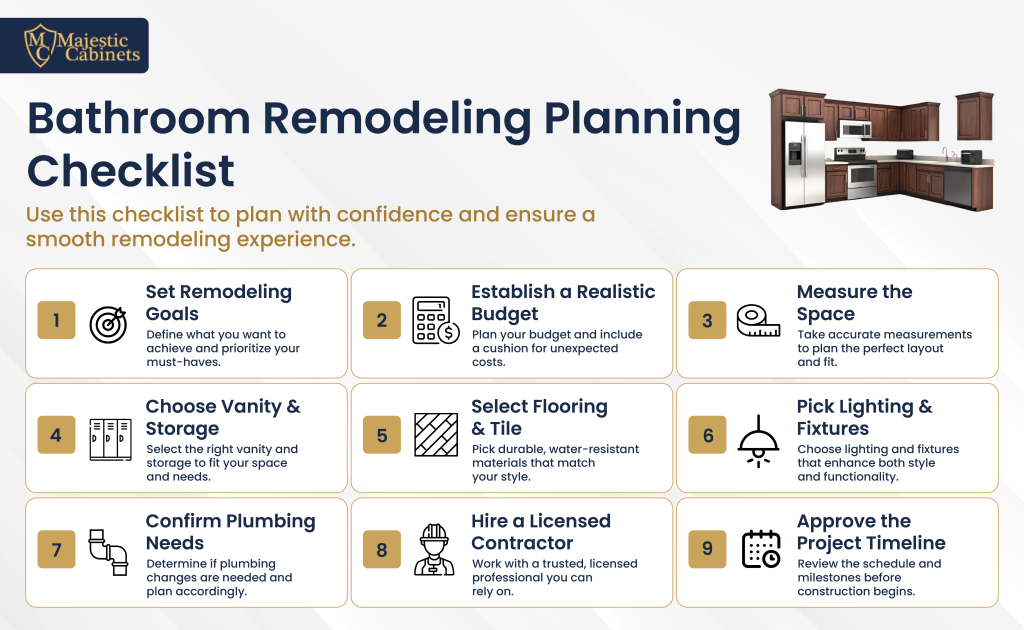
Before you pick a single tile or faucet, think through how you actually use the space, and be honest about what’s frustrated you in the current layout.
1. Set Your Goals
Decide what matters most. More storage. A double vanity. Better lighting. A walk-in shower instead of a tub.
Clear goals guide every decision that follows, and they keep the project from drifting toward changes that look nice but don’t solve your actual problems.
2. Build a Realistic Budget
Account for the vanity, countertop, tile, plumbing, lighting, labor, permits, and a cushion for the unexpected.
Bathrooms often reveal hidden plumbing issues or water damage once work begins, so build in room for surprises rather than treating your initial number as fixed.
3. Plan for the Long Term
If you plan to stay in your home, choose materials that will hold up for years and consider aging-in-place features like grab bars and wider doorways.
If you plan to sell, lean toward timeless finishes that appeal to a broad range of buyers rather than trends that might date quickly.
4. Choose the Right Contractor
An experienced remodeling team helps you avoid costly missteps, especially around plumbing and moisture control.
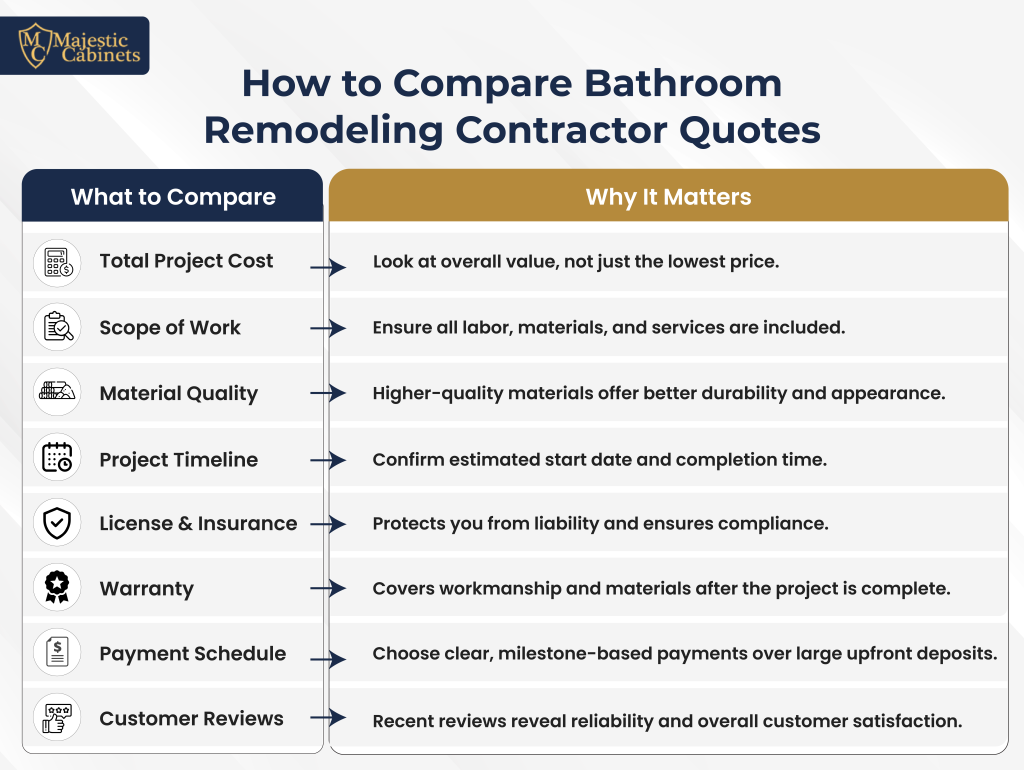
If you are comparing contractors, you should know how to choose a bathroom remodeling contractor before requesting estimates.
The right contractor also knows how to fit custom cabinetry into tight or oddly shaped bathrooms, which is where a lot of stock-cabinet plans fall apart.
Why Do Custom Bathroom Vanities Make the Difference?
The vanity anchors the entire bathroom. It holds your daily essentials, sets the tone for the room’s style, and takes on more moisture exposure than almost any other piece of furniture in your home.
Stock vanities come in fixed sizes and rarely fit older homes with uneven walls or unusual plumbing placement.
We run into this constantly in older Las Vegas neighborhoods, where a stock 30-inch vanity leaves an awkward gap or simply won’t clear a plumbing chase.
Custom vanities solve that problem directly by being built to the space rather than forcing the space to accommodate a standard size.
A Perfect Fit for Your Space
Custom vanities are built to your exact measurements. No gaps, no wasted corners, no compromises around plumbing lines, and no filler panels trying to disguise a size mismatch.
Popular Vanity and Cabinet Styles
The style you choose sets the tone for the entire bathroom, and it’s usually the first decision clients want to make, even before they have settled on countertop material or tile.
1- Shaker Vanities
Shaker style uses a simple recessed panel and clean lines.
It fits traditional, transitional, and modern bathrooms alike, which makes it one of the safest long-term choices we recommend when a homeowner isn’t sure which direction to commit to.
2- Flat-Panel Vanities
Flat-panel doors create a smooth, modern look with minimal detail.
This style pairs well with quartz countertops and simple hardware for a clean, contemporary bathroom, and it tends to photograph especially well in open, natural light.
3- Furniture-Style Vanities
Furniture-style vanities look like a standalone piece of furniture rather than built-in cabinetry.
Raised legs, detailed molding, and a freestanding appearance give the bathroom a warmer, more traditional feel, and we often pair this style with a vessel sink for an elevated, boutique-hotel look.
Choosing Moisture-Resistant Cabinet Materials
Bathroom cabinetry faces more daily moisture than any other cabinetry in the home.
Material choice matters more here than almost anywhere else, and it’s one of the areas where we push back hardest against cutting corners.
Solid Hardwood
Solid hardwood holds up well when properly sealed and finished.
It resists everyday wear and can be refinished down the road if needed, which extends the useful life of the vanity well beyond its original finish.
Moisture-Resistant Plywood
High-quality plywood resists warping and holds its shape even with regular exposure to steam and humidity.
It also holds hardware and joinery securely over time, which keeps drawers gliding smoothly for years rather than sagging or sticking.
Why Particleboard Falls Short in Bathrooms
Particleboard costs less upfront, but it swells and weakens quickly when exposed to moisture. In a bathroom, that exposure happens daily, not occasionally.
We have replaced more than a few particleboard vanities that failed within just a few years of installation, and choosing a moisture-resistant material from the start avoids that repair cost entirely.
Smart Bathroom Storage Features
Custom cabinetry lets you build storage around how the bathroom actually gets used, rather than how a factory assumed it would be used.
Built-In Hampers
A built-in hamper keeps laundry out of sight and out of the way, right where you need it, instead of piled in a corner or hallway.
Pull-Out Drawer Organizers
Pull-out organizers keep hair tools, cosmetics, and grooming items sorted instead of tangled together in a drawer where nothing has a defined spot.
Linen Towers
Tall, narrow linen towers make use of vertical space for towels and extra supplies, especially helpful in smaller bathrooms where floor space is limited but ceiling height isn’t.
Recessed Medicine Cabinets
Recessing a medicine cabinet into the wall adds storage without taking up floor space or crowding the vanity area, which matters most in smaller powder rooms and guest bathrooms.
Vanity Tower Storage
A narrow storage tower next to the vanity adds extra space in bathrooms too tight for a wider cabinet, and it’s one of our most requested additions in compact primary bathrooms.
Choosing Bathroom Countertops
Your countertop needs to handle water, cosmetics, and daily use without wearing down, and the material you choose affects both appearance and long-term maintenance.
Quartz Countertops
Quartz resists stains and moisture without regular sealing. It comes in a wide range of colors, which makes it easy to match any vanity style, and it’s the material we recommend most often for busy family bathrooms.
Granite Countertops
Granite brings natural stone beauty to the bathroom. Each slab looks unique, and the material holds up well with proper sealing, though it does require more upkeep than quartz over time.
Marble Countertops
Marble adds an elegant, high-end look. It needs more care than quartz or granite, since it can scratch, stain, or etch from everyday products like perfume or makeup. Marble works especially well in powder rooms with lighter daily use, where its appearance matters more than its durability.
Solid Surface Countertops
Solid surface material creates a seamless look with no visible seams, which makes it easy to clean and highly resistant to moisture, making it a practical option for households that want low maintenance above all else.
Choosing Bathroom Flooring
Bathroom flooring deals with water more than any other room in the house. Durability and water resistance come first, and style decisions should follow from there.
Porcelain Tile
Porcelain tile resists water, stains, and scratches while offering a wide range of colors and finishes. It remains one of the most reliable choices for bathroom floors, which is why it shows up in the majority of the projects we complete.
Luxury Vinyl Plank
Luxury vinyl plank gives you the look of wood with strong water resistance and easy upkeep. It also feels warmer and softer underfoot than tile, which matters on cold mornings even in a warm climate like Las Vegas.
Natural Stone Tile
Natural stone brings a higher-end look to the bathroom. It needs regular sealing to stay protected from moisture, but the result feels elevated and unique in a way that manufactured tile can’t fully replicate.
Bathroom Lighting Ideas
Good lighting affects both safety and daily comfort in the bathroom, and it’s a detail that’s easy to underdesign if it isn’t planned early.
Ambient Lighting
Ambient lighting fills the whole room evenly. Recessed ceiling fixtures work well for this purpose and form the base layer that every other light source builds on.
Task Lighting
Task lighting around the mirror makes grooming and getting ready far easier. Sconces placed at eye level on either side of the mirror reduce shadows better than a single overhead fixture, which is one of the simplest lighting fixes we recommend to clients who complain about harsh or uneven light at the mirror.
Accent Lighting
Accent lighting highlights features like a shower niche, a freestanding tub, or open shelving, adding warmth and depth to a room that can otherwise feel clinical under bright, even light.
Ventilation Matters Just as Much as Lighting
A strong exhaust fan clears steam quickly and protects cabinetry, paint, and grout from moisture damage.
Pairing good ventilation with good lighting keeps the bathroom both bright and healthy, and we treat fan sizing as a real design decision rather than an afterthought.
Popular Bathroom Layouts
The right layout depends on the size of the bathroom and how many people use it, and it’s often the first thing we assess on a walkthrough.
Single-Vanity Layout
A single vanity works well in smaller bathrooms and powder rooms where space is limited, and only one person typically uses the room at a time.
Double-Vanity Layout
A double vanity gives two people room to get ready at once, which makes it a popular choice for primary bathrooms shared by couples or roommates.
Walk-In Shower With Separate Tub
Separating the shower and tub gives a primary bathroom a more spa-like feel while keeping both options available, which appeals to households where some family members prefer baths and others prefer a quick shower.
Wet Room Layout
A wet room removes the barrier between the shower and the rest of the bathroom, creating an open, water-sealed space that feels larger and more modern, and it’s an increasingly common request in the full renovations we take on.
Final Note!
A bathroom remodel ranks among the smartest investments you can make in your home. It improves daily comfort, protects your home from moisture damage, and adds real value at resale.
If you are ready to turn your bathroom into a space built around the way you actually live, Majestic Cabinets offers premium bathroom remodelling services.
Contact Majestic Cabinets today to schedule a consultation and start planning the bathroom you have always wanted.
Free in-home estimate
Get a Real Quote From a Real Cabinet Specialist
The best way to understand your project is to see the space in person. We visit your home, take measurements, review your ideas, and provide a clear estimate.