Floating Vs Freestanding Vanity for Your Bathroom

About the author
Angel Sandoval is the owner and lead craftsman at Majestic Cabinets LLC, bringing over two decades of hands-on experience in custom cabinetry and residential construction to every project in the Las Vegas Valley.
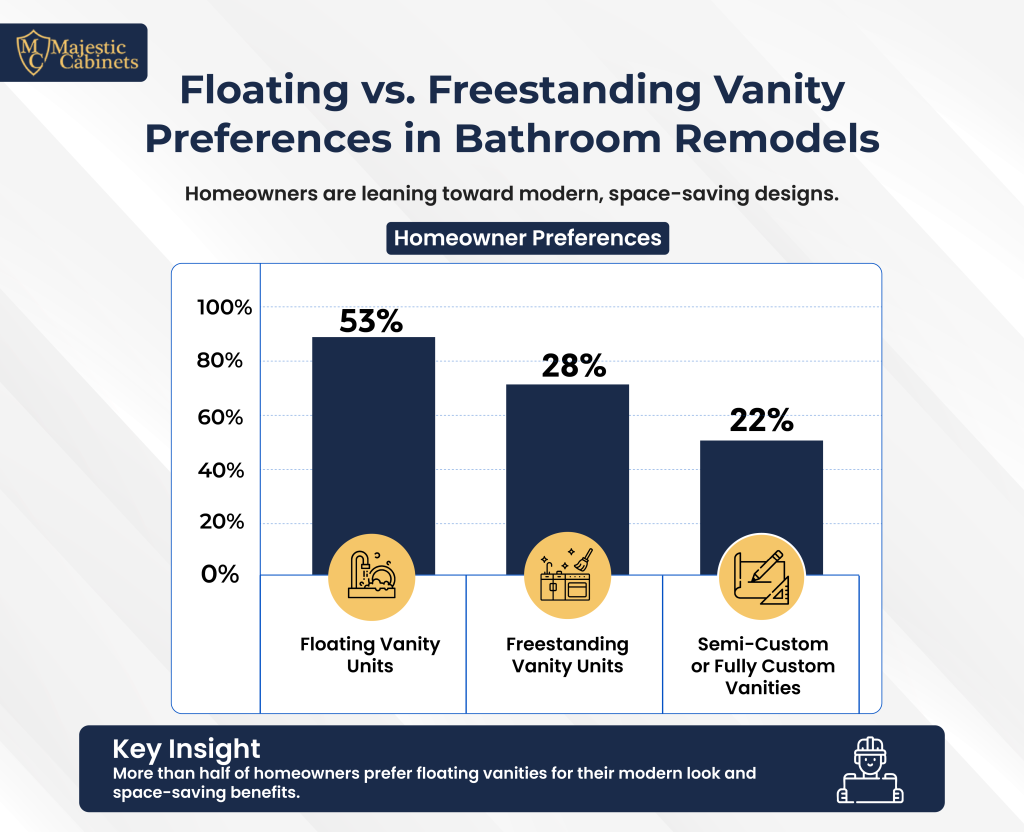
The right bathroom vanity depends on four things: your bathroom’s square footage, design style, storage needs, and remodeling budget.
A floating vanity (wall-mounted vanity) anchors directly to wall studs and hovers above the floor, creating an open, modern look that makes small bathrooms feel larger.
A freestanding vanity rests on the floor and supports its own weight, so it installs faster, costs less, and delivers more cabinet and drawer storage.
Choose a floating vanity for a sleek, spa-like, minimalist bathroom. Choose a freestanding vanity if storage capacity, easy installation, and budget matter most.
At Majestic Cabinets, we build and install custom bathroom vanities for homeowners across Las Vegas.
As a cabinet builder licensed with the Nevada State Contractors Board and fully insured, we design, construct, and install custom kitchen cabinets, bathroom vanities, built-in storage, and full kitchen remodels.
What Is a Floating Vanity?
A floating vanity mounts to the wall instead of resting on the floor. Because the cabinet “floats,” you see open floor beneath it, which tricks the eye into reading the room as larger.
Its streamlined silhouette makes it the go-to choice for modern and minimalist bathroom remodels.
How Do Floating Vanities Work?
Installers attach the vanity cabinet directly to the wall using a French cleat system, heavy-duty brackets, or lag bolts driven into wall studs.
In many Las Vegas remodels, we open the drywall and add 2×6 blocking between studs so the vanity can safely hold 300+ pounds of cabinet, quartz countertop, undermount sink, and everyday items.
Plumbers typically reroute the P-trap and supply lines inside the wall or conceal them behind the cabinet for a clean, uncluttered look. Because the vanity hangs above the floor, proper anchoring is essential for its stability and safety.
In a recent Summerlin primary bathroom remodel, we mounted a 60-inch double-sink floating vanity at a 34-inch height, hid the drain lines in the wall, and installed toe-kick LED lighting underneath.
The homeowners gained a hotel-style look and an easier nightly cleanup.
Wall-Mounted Design Features
Homeowners love the open floor space below a floating vanity. You can sweep, mop, or run a robot vacuum straight underneath; no toe kick collects dust or hair.
Most floating models still include soft-close drawers and cabinet storage, so you get function without visual bulk.
Many designs also allow custom mounting heights, including ADA-compliant installations for accessible bathrooms.
Modern and Minimalist Appearance
Floating vanities anchor modern, Scandinavian, and Japandi bathroom designs.
Their clean horizontal lines, slab-front drawers, and hidden plumbing create a calm, uncluttered space.
Pair one with a wall-mounted faucet, a backlit mirror, and large-format porcelain tile, and even a modest guest bathroom reads as a luxury spa.
Best Bathrooms for Floating Vanities
Floating vanities perform best in small bathrooms, powder rooms, and modern primary suites.
The visible floor underneath makes a 5×8 guest bathroom feel noticeably bigger.
They also suit homeowners who want a sleek, updated look without heavy cabinetry crowding the room.
In multigenerational homes, a floating vanity mounted at a custom height also improves wheelchair access.
What Is a Freestanding Vanity?
A freestanding vanity stands directly on the bathroom floor, just like a piece of furniture.
It balances style, storage, and practicality, which makes it the most common vanity type in American homes.
How Do Freestanding Vanities Work?
Freestanding vanities connect to plumbing through the wall or the floor, and the floor carries all the weight.
Installers level the cabinet, secure it to the wall with a few screws to prevent tipping, hook up the drain and supply lines, and set the countertop.
Most handy homeowners or any licensed installer can complete the job in a few hours, which keeps labor costs down.
Traditional Floor-Mounted Design
Freestanding vanities span every design style. Shaker-style doors and brushed nickel hardware suit traditional and farmhouse bathrooms, while flat-panel doors and matte black pulls fit contemporary spaces.
Because the cabinet meets the floor, it grounds the room and gives the bathroom a solid, furniture-like presence.
For a Henderson family of five, we built a 72-inch freestanding double vanity in moisture-resistant plywood with dovetail drawers.
Each child got a dedicated drawer, and the parents gained a full cabinet for towels, storage a floating vanity of the same width couldn’t match.
Storage and Cabinet Features
Storage drives most freestanding vanity purchases.
The cabinet extends all the way to the floor, so you gain full-height storage for hair dryers, cleaning supplies, towels, and toiletries.
Most models combine deep drawers, adjustable shelves, and double-door cabinets.
For busy family bathrooms, that extra capacity keeps countertops clear.
Best Bathrooms for Freestanding Vanities
Freestanding vanities are ideal for large bathrooms, family bathrooms, and shared kids’ bathrooms where storage matters most.
Homeowners also choose them for rental properties because they install quickly and cost less, which shortens the time it takes to complete a small bathroom remodel from start to finish.
If your Las Vegas home has plumbing running through the floor slab, a freestanding vanity also avoids the expense of relocating plumbing.
Cabinet Refinishing Specialists
Make Your Old Cabinets Look New Again
If your cabinets are still structurally sound but look worn or outdated, refinishing is the smartest move. Most jobs in Las Vegas are completed within a few days — we keep the mess to a minimum the whole time.
Floating Vanity vs. Freestanding Vanity: Main Differences
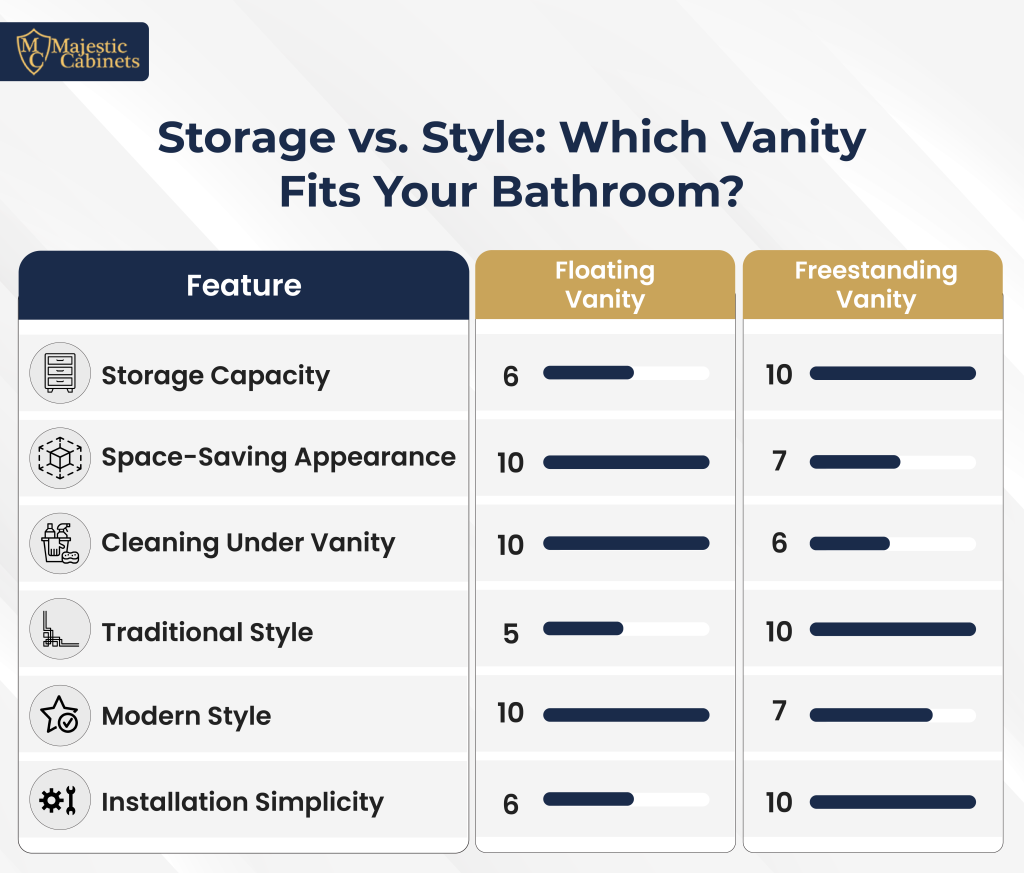
Each vanity type serves a different priority. The right choice depends on your bathroom size, style, storage needs, and budget. Here’s how they compare side by side.
| Main Difference | Floating Vanity | Freestanding Vanity |
| Placement | Mounts to wall studs above the floor | Stands directly on the floor |
| Look | Sleek, modern, minimalist | Classic, furniture-style, versatile |
| Space Impact | Opens floor space; makes small bathrooms feel larger | Occupies more visual space |
| Storage | Moderate; no full-height cabinet | Maximum drawers, shelves, and cabinets |
| Installation | Complex; requires blocking and often plumbing changes | Simple; levels, anchors, and connects in hours |
| Cleaning | Easy; mop straight underneath | Harder; dust collects at the toe kick and base |
| Cost | Higher purchase and labor cost | More budget-friendly |
| Best Choice For | Modern, small, or accessible bathrooms | Family bathrooms and storage-heavy households |
Pros and Cons of Floating Vanities
Floating vanities trade storage for style. Weigh these strengths and weaknesses before you commit to a wall-mounted design.
- Makes small bathrooms feel larger: the visible floor underneath creates an open, airy sightline.
- Modern, high-end look: the slab-front, wall-hung design elevates contemporary remodels and boosts buyer appeal.
- Easier cleaning and custom heights: mop straight underneath, and mount it anywhere from a 32-inch ADA height to a 36-inch comfort height.
But, at the same time, these vanities have some drawbacks:
- Less storage: the cabinet stops well above the floor, so you lose full-height space.
- Complex, costlier installation: the crew must locate studs, add blocking, and often relocate plumbing inside the wall.
- The wall carries all the weight: weak framing or tile-only anchoring creates a real safety risk.
Pros and Cons of Freestanding Vanities
Freestanding vanities win on practicality but give up some visual lightness. This is what you gain with a freestanding vanity:
- Maximum storage: full-height cabinets, deep drawers, and adjustable shelving.
- Fast, affordable installation: the floor carries the weight, so there’s no blocking, reinforcement, or plumbing relocation.
- Fits any style and budget: options span traditional, farmhouse, transitional, and modern at every price point.
All that practicality, however, carries a few drawbacks:
- Crowds small bathrooms: the cabinet occupies floor space and shrinks the visual footprint.
- Bulkier appearance: its larger mass can weigh down a minimalist design.
- Harder to clean around: dust, hair, and moisture collect along the toe kick and base.
How to Choose the Right Vanity for Your Bathroom?
The right vanity balances your bathroom’s size, your storage needs, and your budget. Follow these nine steps to choose a vanity you will love for decades.
Step 1: Measure Your Bathroom
Record the width, depth, and height of the installation wall, and confirm door swings, shower doors, and toilet clearance.
The National Kitchen & Bath Association‘s planning guidelines call for at least 21 inches of clear space in front of the vanity.
Step 2: List What You Will Store
Count towels, appliances, toiletries, and cleaning supplies. A family of four needs far more drawer space than a powder room used by guests.
Step 3: Match the Vanity to Your Design Style
Choose a slab-front floating vanity for modern spaces or a Shaker-style freestanding vanity for traditional and farmhouse bathrooms. The vanity should blend with your tile, hardware, and paint palette.
Step 4: Pick Moisture-Resistant Materials
Las Vegas bathrooms battle daily steam and hard water. Choose solid wood, marine-grade plywood, or high-quality MDF with a sealed finish — and skip bare particleboard, which swells and delaminates.
Step 5: Set the Right Vanity Height
Standard vanities sit at 32 inches; comfort-height vanities rise to 36 inches. Pick the height that reduces back strain for the people who use the sink every day.
Step 6: Verify Your Plumbing Layout
Confirm whether your drain and supply lines run through the wall or the floor slab before you buy. Floor plumbing favors a freestanding vanity; wall plumbing supports either style.
Step 7: Coordinate the Vanity With Mirrors and Lighting
Size the mirror to the vanity width and layer sconces or an LED mirror for shadow-free task lighting. Matched elements make the whole bathroom feel intentional.
Step 8: Set a Complete Budget
Add the cabinet, countertop, sink, faucet, hardware, and installation labor before you shop. A written budget prevents surprise costs mid-remodel.
Step 9: Choose Long-Term Value Over the Lowest Price
Prioritize soft-close hardware, dovetail drawer joints, and a warranty-backed builder. A well-built custom vanity serves your household and your resale value, for decades.
Do your research before choosing a bathroom remodeling contractor. It is just as important as the vanity itself, because even a well-built cabinet fails if it is installed poorly.
6 Common Mistakes Homeowners Make When Choosing Bathroom Vanities
A vanity adds storage, supports your daily routine, and defines the room’s look. Yet many homeowners rush the decision and focus only on style.
Avoid these six mistakes we see most often in Las Vegas remodels.
1. Choosing the Wrong Size
Size matters more than most people realize. Measure the room before you buy, and confirm that doors, drawers, and nearby fixtures all clear the new cabinet. We once replaced a brand-new 48-inch vanity in North Las Vegas because its drawers hit the bathroom door every time it opened.
2. Focusing on Style Instead of Function
A vanity that fits your daily routine delivers more value than one chosen for looks alone. Weigh storage capacity, drawer access, and counter layout just as heavily as door style and finish.
3. Not Planning Enough Vanity Storage
Homeowners consistently underestimate storage needs. Choose a vanity with dedicated drawers and organized compartments for each person’s items, and your countertop stays clutter-free.
4. Choosing Low-Quality Materials
Bathrooms endure water splashes and humidity every single day. Cheap particleboard warps, swells, and peels within a few years, while solid wood and moisture-sealed plywood last for decades and need fewer repairs.
5. Ignoring Counter Space
Everyday items, soap dispensers, toothbrushes, skincare, styling tools, all need landing space. Confirm the countertop leaves usable surface area after you place the sink and faucet.
6. Buying Without a Clear Budget
The cabinet represents only part of the total cost. Countertops, sinks, faucets, plumbing work, and installation labor add up quickly. Set a firm spending limit before you shop, and you avoid overspending and mid-project surprises.
Conclusion
Weigh your available space, budget, and daily storage needs before you decide. If you want a sleek, modern look and an open, easy-to-clean floor, choose a floating vanity.
If storage capacity, affordability, and simple installation top your list, a freestanding vanity is the better choice.
Ready to upgrade your bathroom?
Majestic Cabinets designs, builds, and installs custom vanities for homeowners across Las Vegas, Henderson, Summerlin, and North Las Vegas.
Schedule your installation consultation today or call us at (702) 457-1158 and get a vanity built for your exact space, style, and budget.
People Also Ask
Does a Floating Vanity Make a Bathroom Look Bigger?
Yes. The open space beneath reveals more of the floor, and that continuous sightline makes the bathroom feel larger than its actual footprint.
Are Floating Vanities Still in Style?
Yes. Floating vanities remain a top choice in modern bathroom design. Their clean lines suit contemporary, Scandinavian, and spa-style bathrooms, and designers continue to feature them in high-end remodels.
Which Vanity Offers More Storage?
A freestanding vanity usually wins on storage. Its cabinet extends to the floor, which adds full-height space for towels, appliances, and supplies that a floating vanity can’t match.
Are Floating Vanities More Expensive?
Yes, in most cases. The cabinet itself often costs more, and installation adds labor for stud blocking and plumbing relocation. Final cost depends on size, material, and design.
Is a Floating Vanity Harder to Install?
Yes. A floating vanity needs to be securely anchored to wall studs or blocking because it never touches the floor. That structural work makes installation more complex than a standard floor-mounted vanity.
Free in-home estimate
Get a Real Quote From a Real Cabinet Specialist
The best way to understand your project is to see the space in person. We visit your home, take measurements, review your ideas, and provide a clear estimate.