Even in these modern times, the kitchen remains to be the heart of an American home. It is where we prepare our meals, and therefore, it should be kept neat and spacious. However, because of congestion in most urban cities, the amount of space for each home, including the kitchen, becomes significantly smaller.
An ideal kitchen would still look large and spacious enough to work on regardless of space. Luckily, there are basic design rules we could live by. Are you a do-it-yourself homeowner who wants to be hands-on with how your home would look? You could use the following cabinet color combinations for small kitchens so it can appear bigger.
Color Combination Ideas for Small Kitchens
Basically, the rule of thumb is to go with light colors. To make the room appear bigger, light tones are the best colors for a small kitchen. The lightness of your walls, counters, cabinets, ceilings, and floors create the illusion that the kitchen is bright and spacious. If you feel like you have limited choices, below are the different categories of kitchen color ideas for small kitchens:
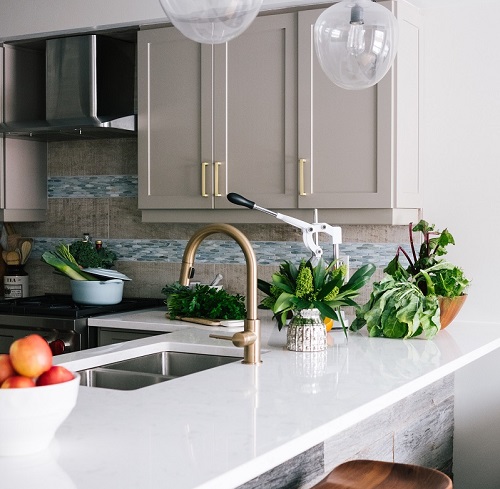
White and off-white colorsYou can never go wrong with white. It is a clear color that can go well with many different home themes and design inspirations. White is very classic and elegant. The best thing about white is that among all other colors, it reflects the most amount of light. The walls can seem like they are receding with this color. White can make your kitchen appear bright, clean, and spacious. One of its advantages is that there is no better way to spot grease and other dirt in your kitchen easily. If white feels too crisp, you can also use off-white for a more relaxed look.
Monochromaticscheme
If you want a touch of boldness and a well-defined kitchen look, you may go for monochromatic colors. These are best for sleek and stylish modern or industrial style finishes. Here, you can still use dark or black cabinet colors for small kitchens. A touch of white is still recommended, but you can also use different shades of gray. The high contrast between black and white is strong on the eye, and it can also minimize visual clutter. White and black are not the only neutral colors you can use. Shades of brown may not be monochromatic, but a neutral scheme is also good kitchen color ideas for small kitchens.
Colors with lowcontrast
To create low contrast, we go by the rule of sticking to light colors. The easiest combination would be white plus any pastel colors. This would be the perfect opportunity to put in your favorite pastel colors that give you the feeling of home. It can be the cool waves of the ocean in light blue or the warm colors of light yellow or pastel orange. Low contrast colors will give a sense of continuity in your space. You would not need to have a hard time choosing the cabinet colors for small kitchens. You can choose a slightly lighter or darker tone from your wall color. It can also apply to your shelves, backsplash, counters, and more.
Bright, glossy paint
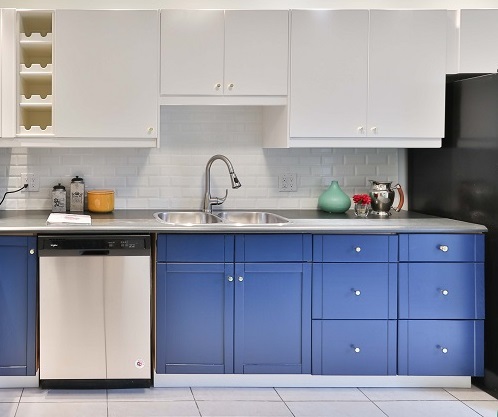
Another way to use bold colors is by using bright and glossy finishes in your kitchen. A vibrant red, blue, or any primary and secondary color can still make your kitchen look spacious if you use glossy paint. It creates a high amount of luster that reflects light and enlarges your space. Aside from shiny paint, you can also use metal appliances to add to the luster and light of the room. Along with the right lighting, the glossy cabinets and counters can make a very stylish kitchen.
Best Color Combinations for Small Kitchens
Picking all the light colors you like can turn out to a color palette disaster. Some colors work well, while some bright or bold colors do not go well with others. The right color combination is essential, especially if you are going for a particular look. There are ways to mix and match the colors mentioned above. Below are some examples if you are having a hard time choosing a color combination:
White and natural wood tones
White, off-white, and soft blue tones
White, mint-green, and aqua tones
White, black, and yellow tones
White, black, and any color tones
Shades of gray tones
Blue, brown, and copper tones
Turquoise, yellow, and chartreuse tones
Spice-colored tones
Natural green, cream, and wooden tones
Redesign Your Small Kitchen
In summary, lighter colors, as well as natural shades, provide a warmer and spacious vibe to your kitchen. With this information, choosing the best colors for small kitchen is now made easier.
Still, redesigning your entire kitchen, from your walls and tiles to your cupboards and cabinets, can be a huge work. With the help of makeover and cabinet makers Las Vegas can offer, you can have the colors and combinations perfect for your kitchen and cabinet refacing.
https://majesticcabinetsllc.com/wp-content/uploads/2019/11/sidekix-media-VYI9oIKl1wE-unsplash.jpg533800Owen Wrighthttps://majesticcabinetsllc.com/wp-content/uploads/2019/01/logo-1.pngOwen Wright2019-11-20 06:22:212024-02-26 18:48:22Best Color Combinations for Small Kitchen
More than just a storage space, cabinets can also function as an accent to add color and style to any room. And because they are functional and contribute to your home’s aesthetics, you make sure that it is properly maintained. You want to keep them looking immaculate and polished, just like when they were newly installed.
Aside from regular cleaning and sometimes even polishing, you should also check for the presence of any wood-eating bugs. It is an essential part of cabinet maintenance since insects that eat wood can destroy your cabinets. Find out what these harmful insects are, how to recognize and prevent infestation, and how to treat damaged cabinets.
Recognizing the Signs of Infestation
Small but terrible, wood-eating insects can destroy your cabinet and even reduce it to dust! They chew up the wood from inside out and weaken the structure of wooden cabinets. Over time, the structural strength of the cabinet will fail, and the cabinet may break down.
Checking for signs of infestation will allow you to catch the onset of invasion and stop it from spreading and causing considerable damage. The following signs indicate the presence of insects that eat wood:
Exit holes in woods – These are tiny holes with a diameter of 1-2mm for the smaller beetles and 3-7mm for the larger beetles.
Frass or bore dust – This is a fine, powdery substance composed mainly of feces and some wood fiber usually found below or on the infested wood.
Tunnels in infested wood – These tunnels are marks left by beetle larva as they bore through the wood. The tunnels can measure up to 7.5 mm in diameter.
The wood crumbles – It first appears around the edge and corners of the affected wood. The hollowing causes the crumbling of the wood due to the tunnels made by wood borers.
Weak and damaged wood – The cabinet floor, panels, and door may begin to weaken and give way, especially when pressure is applied.
Mud tubes on or around the cabinet – These are tunnels the size of a regular pencil made from soil and wood particles created by termites.
Termite galleries – these are the hollow spaces that typically run parallel to the wood grains.
The sound of scraping wood – Sometimes, when they are active, you can hear the beetle larva inside their tunnels as they scrape the wood.
The presence of insects and insect eggs – The most apparent indication would be the presence of insects, whether dead or alive and insect eggs. Laid in clusters, the eggs are usually white or greyish depending on the type of insect. They are small, from 0.35mm-2mm long, and are typically found in crevices, joints, cracks, and exposed ends of the wood.
Types of Wood-Eating Bugs
Different kinds of wood eating bugs target different types of wood. Some insects like hardwoods, while others prefer pine; some insects don’t really eat the wood, while others actually do. But they all do damage just the same. Here are some common insects that eat wood:
Termites
What are they – These are winged insects that create tunnels and eat wood. Two common types of termites that infest the wood are the drywood termite and the subterranean termite. The drywood termites infest from above the ground, usually dry area. Subterranean termites thrive on areas where moisture or humidity is present. They are common in places with warm or tropical climates. Signs of their presence – Mud tubes, termite galleries, and tunnels.
Wood-Boring Beetles
What are they – Ranging from tiny (1/8 inch) to large (2 inches) in size, wood-boring beetles can be flat or round-headed with an antenna. Common types of wood-boring beetles include bark beetles, wood wasps, or long-horned beetles. Signs of their presence – Exit holes, bore dust, and tunnels.
Carpenter Ants
What are they – Large ants that can be red, black, or yellow depending on the species. They may or may not have wings. They burrow and nest in softwood materials, like insulation board and rotting woods. Signs of their presence – Wood shavings around the area where they nest.
Horntails
What are they – Large insect that resembles a wasp and has a long but rather harmless stinger. They usually target softwoods such as pine, spruce, or cedar. Signs of their presence – Large exit holes, around half an inch in size.
Carpenter moths
What are they – These are highly-destructive pale and hairless wood-boring larva that lives up to three years. An adult carpenter moth has a thick body and mottled gray or brown wings, spanning about 2 inches. Signs of their presence – Exit holes and tunnels.
Infestation Treatment and Prevention
In worst cases, infestation treatment is best left to the professional pest control companies. But if caught early on, the infestation can be stopped and kept under control using the following methods:
Use a commercial insecticide to kill bugs and larva. Spray or apply the product twice for the best results. Be sure to allow the first application to dry completely before putting the second application.
You may use boric acid (borax) or diatomaceous earth to kill ants, termites, and beetles. You can apply the said powders directly to the cracks and crevices with the use of a powder duster.
You can also sprinkle or inject poisoned bait. It works by attracting foraging insects, which will spread the poison back into their colony.
Of course, prevention is always better than cure. Keeping the area inside and around the cabinet clean and dry will help keep insects and bugs away. Spraying a liquid termite barrier can also help significantly by stopping the infestation before it could start.
Damaged wood cabinets can be replaced though it can be costly. For minimal damages, a cabinet repair will be sufficient. Being proactive in preventing wood-eating insects from doing damage to your cabinets will help avoid expensive replacements and pest control service.
https://majesticcabinetsllc.com/wp-content/uploads/2019/11/jai-hill-wiX8lf3MkmY-unsplash.jpg533800Owen Wrighthttps://majesticcabinetsllc.com/wp-content/uploads/2019/01/logo-1.pngOwen Wright2019-11-11 06:24:132024-02-26 18:48:47Protecting Cabinets from Wood-Eating Bugs