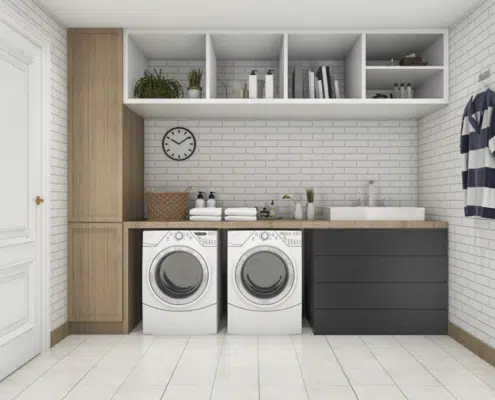
White Kitchen Cabinets Flooring Ideas
If you are planning to refresh your home with some kitchen remodeling, there are a huge number of options when it comes to kitchen flooring ideas. The right kitchen tile flooring for your home depends on several practical factors as well as style. Take a look at the pros and cons of each of these flooring materials to help you decide on the best tile for kitchen flooring in your home:
Hardwood Floors
Although hardwood floors were once seen as a risky choice for kitchens due to the potential for water damage, today’s modern finishes and sealants make it a much more durable option. However, they will need to be resealed every few years or so, depending on the type of wood and sealant used.
Hardwood floors are easy on your feet and can give your kitchen a light and airy feel. It can be damaged more easily than some other flooring types as it can be dented and scratched, but a well-used hardwood floor can give a room a homely, lived-in feel that might appeal to you, especially in a family home. If it does not appeal, one advantage of hardwood is that it can be sanded down and refinished fairly easily to make it look like a brand new floor again.
Laminate Floors
Laminate flooring is made by pressing together composite wood at high temperature, before stamping the appearance and texture of hardwood onto the surface of the laminate. Laminate is cheaper, more durable, and easier to clean than hardwood. High-quality laminate flooring does a good job of looking and feeling like the real thing, but you may notice the difference with time and wear, or spot a repeating pattern in the laminate print.
Tile Flooring
Both ceramic and porcelain tile flooring share several advantages.
Tile flooring is very easy to clean and maintain. It is completely non-porous without the need for resealing or other treatment. As a result, you won’t need to worry about food stains or mud leaving any permanent marks on your flooring. Because of this, how to clean tile floors is as simple as sweeping and mopping, with no extra steps or concerns about stains and moisture. It also will not be damaged by heat or moisture, as long as the grout lines are properly sealed.
Overall, tile flooring offers a wide range of styles and great durability at an affordable cost, making it viable for a wide range of kitchen flooring ideas. The only downside is that tiling can be cold on bare feet and may become slippery when wet depending on the type and texture of the tiles.
Ceramic Flooring
Ceramic tiles are a highly durable material that won’t stain or be damaged by water, and they are extremely hard and unlikely to chip or break when a dropped object hits them. Their main drawback is that they can be a little cold and hard, especially early in the morning when they have been cooling down all night.
Stylistically, ceramic tiles are one of the most flexible options as they can come in a wide range of colors and patterns, and can be made to mimic other materials such as wood, stone, or brick.
Porcelain Flooring
Porcelain tiles are an extra hard type of ceramic tile. They are even more durable and less porous than regular tile flooring. Porcelain flooring shares many of the same benefits as ceramic tiling, including the ability to mimic many other materials. In fact, porcelain is available in a wider range of forms and textures that look like other materials such as natural stone tiling, giving it an advantage over ceramic tiles in this area.
Although it is more long-lasting than other types of tile flooring, porcelain can also be more brittle due to its additional hardness. This means it may shatter or crack under heavy impacts that a ceramic tile might have survived with a minor chip.
Vinyl Flooring
Vinyl flooring is versatile, easy to clean and maintain, and inexpensive, with little to no upkeep costs. It can fade and wear out faster than other materials though and can need to be replaced every ten years or so. It is available as sheets and tiles, and also in more modern forms that can mimic the look and feel of other materials like wood and stone, with less maintenance.
Natural Stones
A natural stone kitchen floor can be durable, long-lasting, and highly attractive. While still a fairly hard surface regardless of the type of stone you choose, natural stone floors can feel softer and warmer underfoot than you might expect, as they tend to retain heat better than ceramic and porcelain.
Common natural stone flooring materials include polished marble, which is one of the most attractive and luxurious flooring options. It can scratch and stain fairly easily, and it may not be the ideal choice for messy cooks or large households with kids.
Slate tiles are also a popular choice. Slate tiles can be smooth and polished, but you can also opt for uneven, roughly textured cleft tiles. These give a kitchen a more rustic look, and also provide extra grip when the floor is wet. Slate is extremely hard and durable, even by the standards of other stone floorings.
Cork Flooring
Cork tile flooring achieves a great balance of comfort and durability. Cork can be dyed almost any color, allowing for a wide range of styles and patterns.
Cork tiles are treated to seal them from moisture, however, this treatment can be damaged with wear, and moisture that finds its way through the sealant may damage the cork or cause mold.
Cork flooring is much warmer than many other types of floor tiles, and also much softer. If comfort is a priority, this might be the best choice of tile for kitchen flooring. This is more comfortable for your feet, and can also reduce the risk of plates and glasses shattering when they are dropped. This softness does also make the floor more prone to damage, however, and it can be a good idea to use pads to protect it from heavy furniture, which may leave indentations. Pet claws can also cause enough damage to the sealant to risk moisture damage, so cork floor tiles may not be suitable for families with cats or dogs.
Conclusion
Take these factors into consideration when picking your new kitchen flooring and you will be sure to have a new kitchen you will love for years to come. No matter what type of flooring you choose, installation is crucial to ensuring your floor looks great and stands the test of time. If you need any help or advice in flooring your new kitchen, contact us for a free consultation.